Curator and Writer
Simon Wu
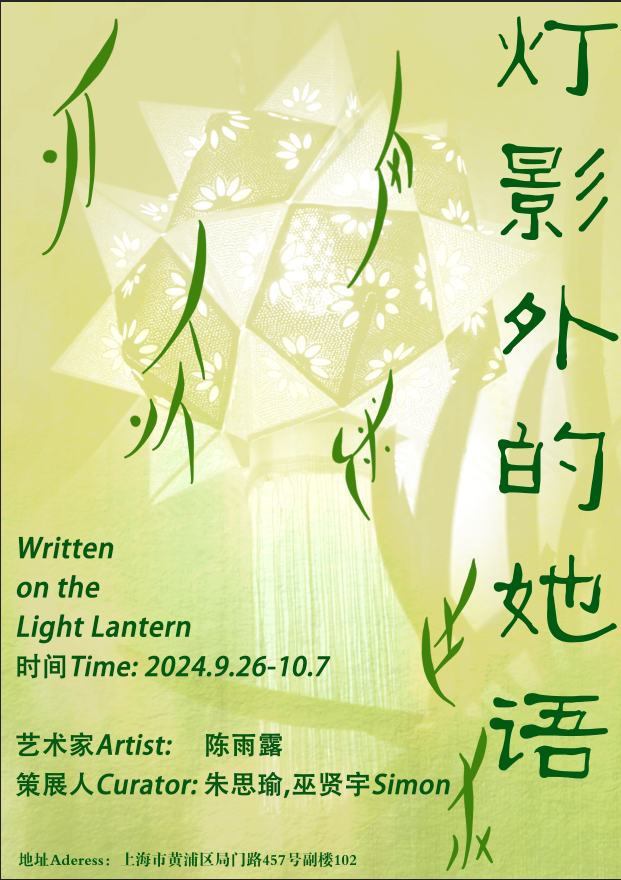
燈影外的她語 Written on the Light Lantern
An art exhibition in Shanghai on the intangible cultural heritage of China, Nyu Shu and Boneless Lanterns.
一個在上海承辦的關於非物質文化遺產“女書”和“無骨花燈”的藝術展覽。
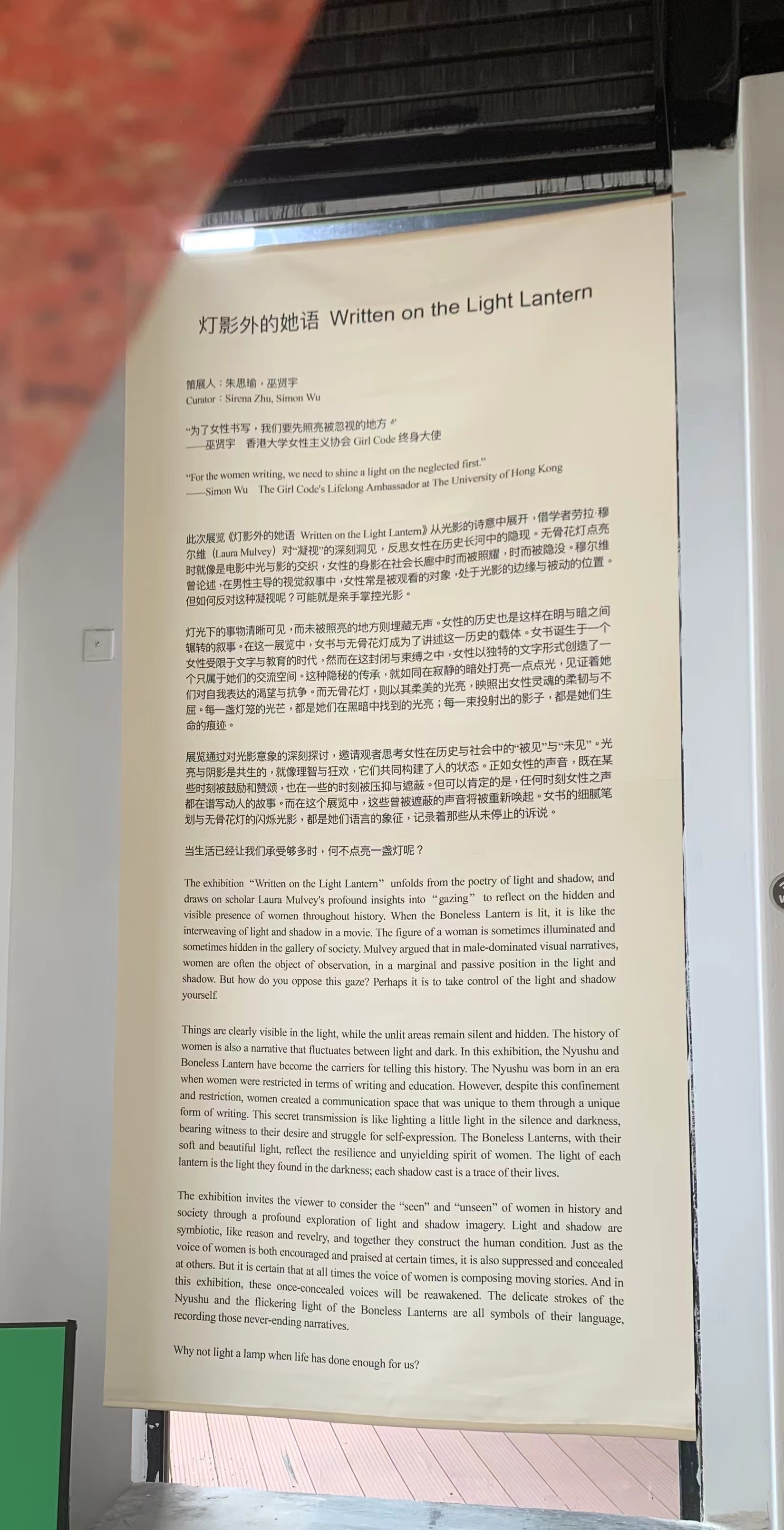

“For the women writing, we need to shine a light on the neglected first.”
——Simon Wu The Girl Code’s Lifelong Ambassador at The University of Hong Kong
“為了女性書寫,我們要先照亮被忽視的地方。”
——巫賢宇 香港大學女性主義協會Girl Code終身大使
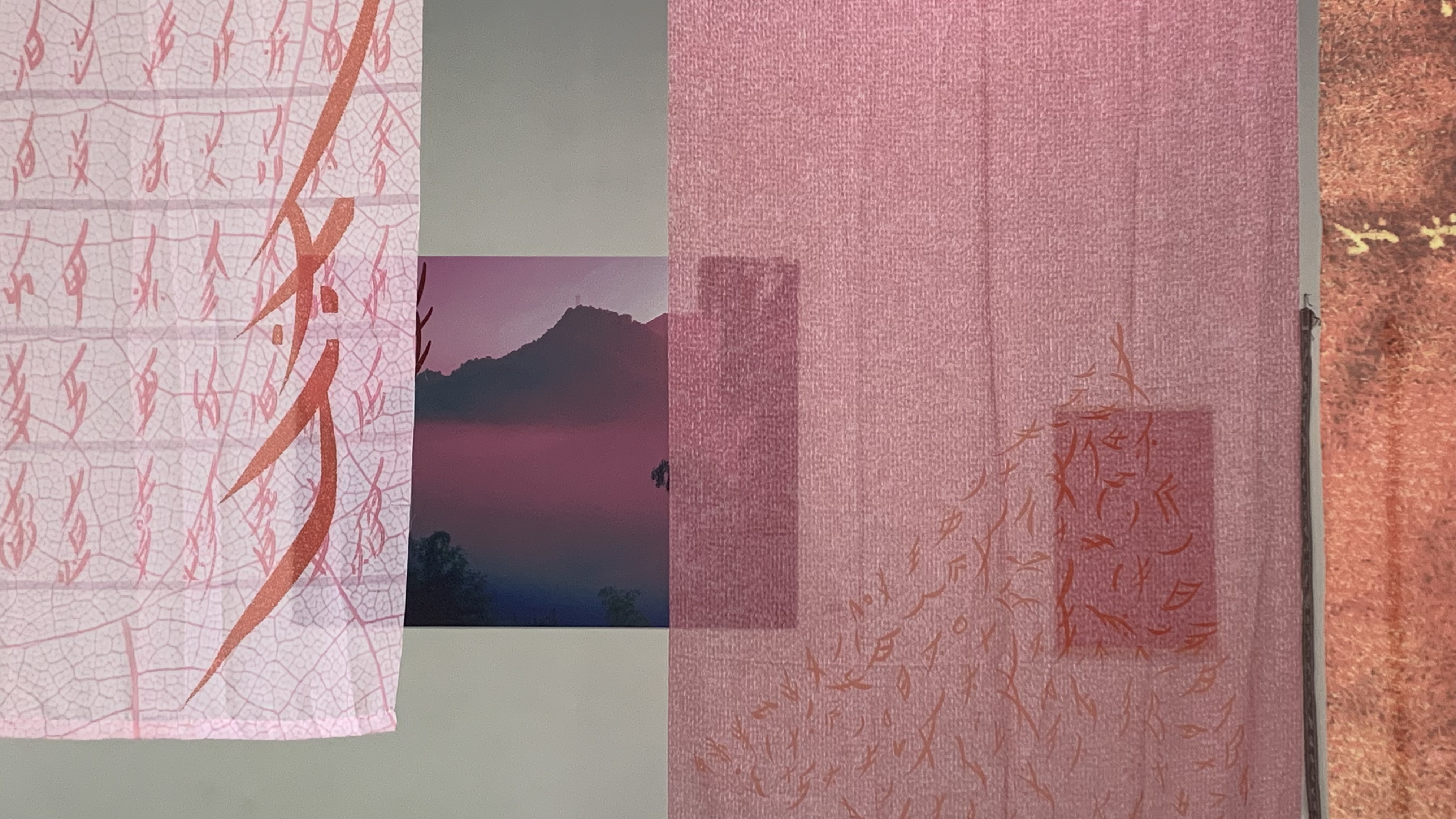
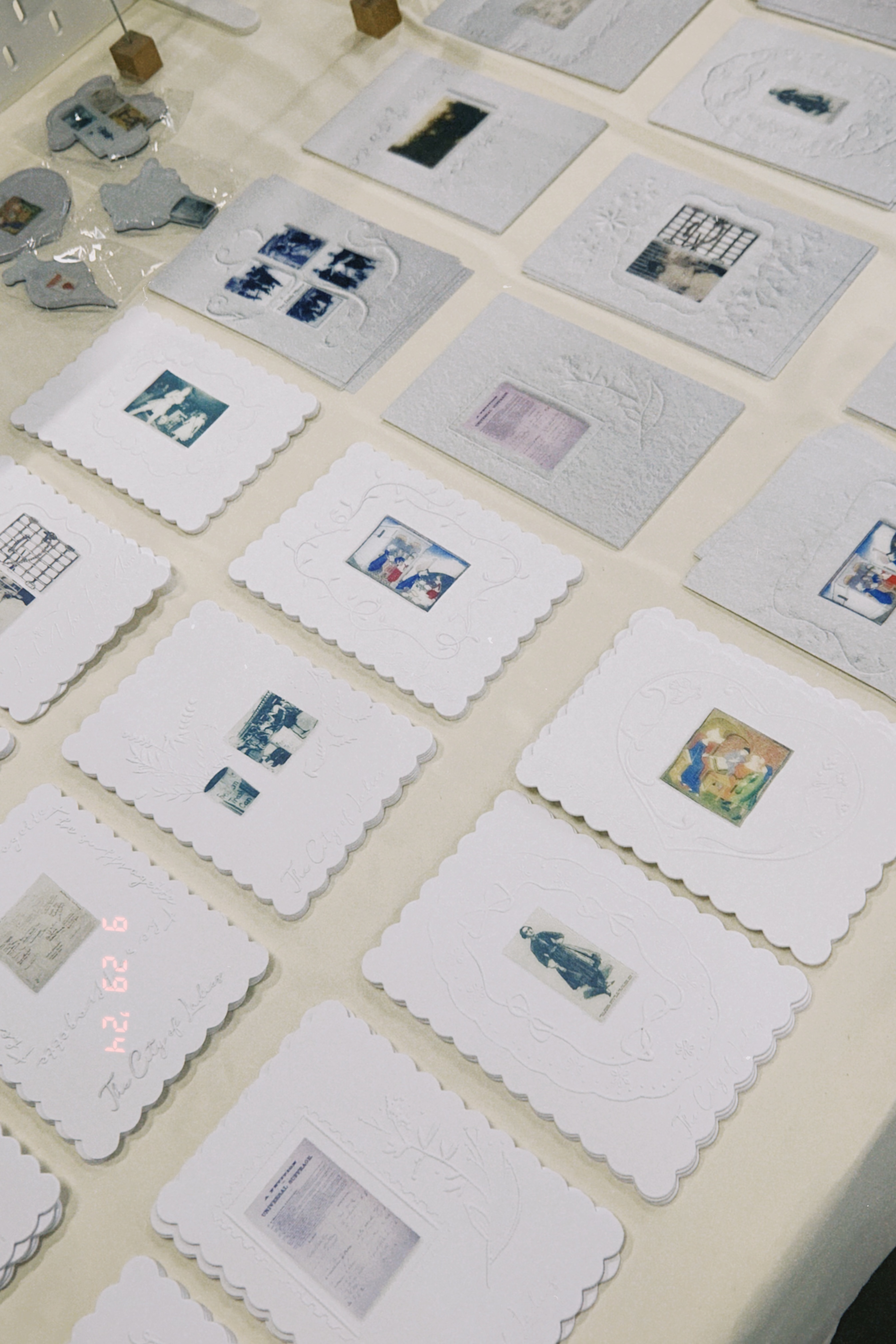
The exhibition “Written on the Light Lantern” unfolds from the poetry of light and shadow, and draws on scholar Laura Mulvey’s profound insights into “gazing” to reflect on the hidden and visible presence of women throughout history. When the Boneless Lantern is lit, it is like the interweaving of light and shadow in a movie. The figure of a woman is sometimes illuminated and sometimes hidden in the gallery of society. Mulvey argued that in male-dominated visual narratives, women are often the object of observation, in a marginal and passive position in the light and shadow. But how do you oppose this gaze? Perhaps it is to take control of the light and shadow yourself.
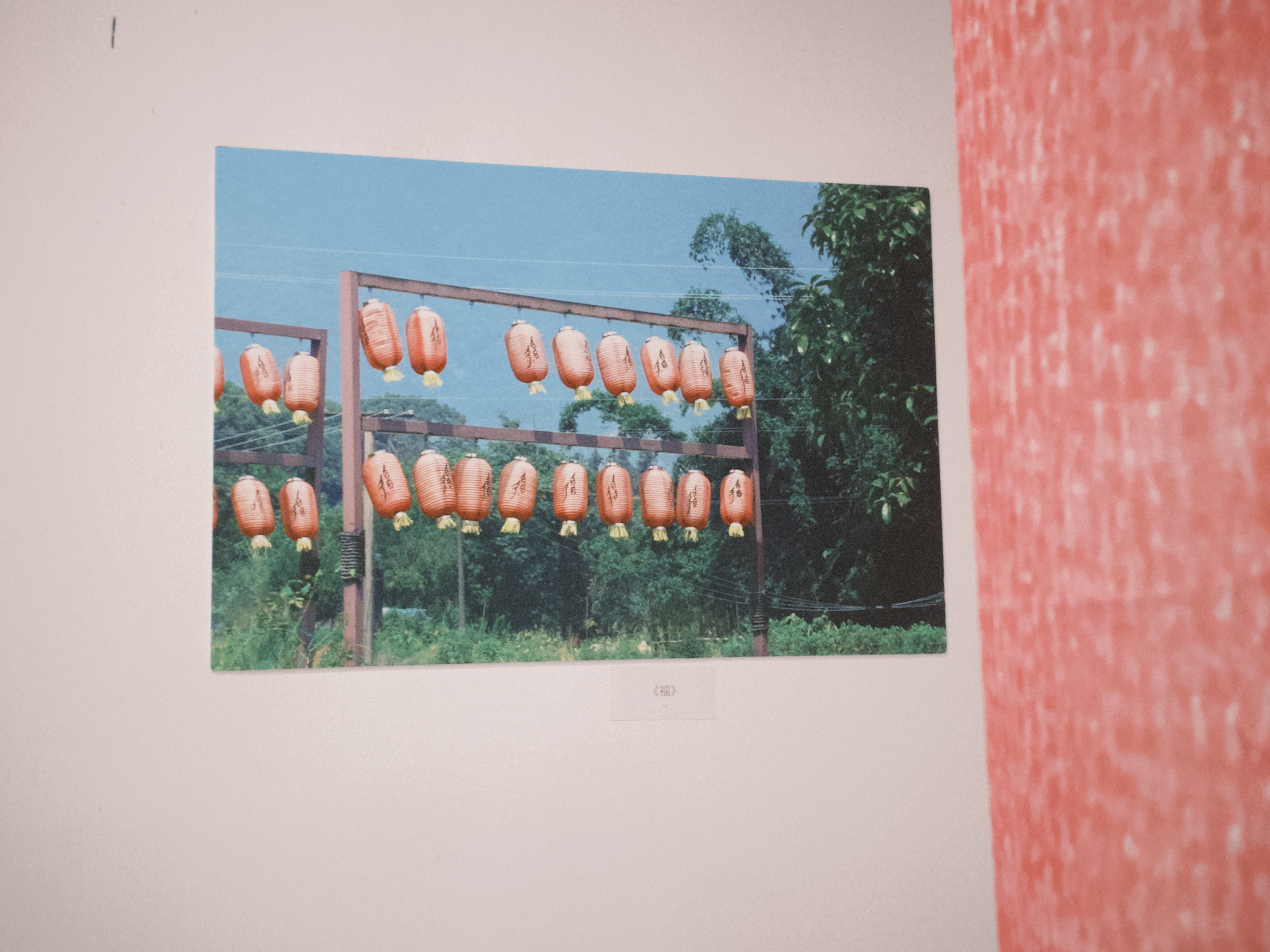
Things are clearly visible in the light, while the unlit areas remain silent and hidden. The history of women is also a narrative that fluctuates between light and dark. In this exhibition, the Nyushu and Boneless Lantern have become the carriers for telling this history. The Nyushu was born in an era when women were restricted in terms of writing and education. However, despite this confinement and restriction, women created a communication space that was unique to them through a unique form of writing. This secret transmission is like lighting a little light in the silence and darkness, bearing witness to their desire and struggle for self-expression. The Boneless Lanterns, with their soft and beautiful light, reflect the resilience and unyielding spirit of women. The light of each lantern is the light they found in the darkness; each shadow cast is a trace of their lives.
The exhibition invites the viewer to consider the “seen” and “unseen” of women in history and society through a profound exploration of light and shadow imagery. Light and shadow are symbiotic, like reason and revelry, and together they construct the human condition. Just as the voice of women is both encouraged and praised at certain times, it is also suppressed and concealed at others. But it is certain that at all times the voice of women is composing moving stories. And in this exhibition, these once-concealed voices will be reawakened. The delicate strokes of the Nyushu and the flickering light of the Boneless Lanterns are all symbols of their language, recording those never-ending narratives.
Why not light a lamp when life has done enough for us?
此次展覽《燈影外的她語 Written on the Light Lantern》從光影的詩意中展開,借學者勞拉·穆爾維(Laura Mulvey)對“凝視”的深刻洞見,反思女性在歷史長河中的隱現。無骨花燈點亮時就像是電影中光與影的交織,女性的身影在社會長廊中時而被照耀,時而被隱沒。穆爾維曾論述,在男性主導的視覺敘事中,女性常是被觀看的對象,處於光影的邊緣與被動的位置。但如何反對這種凝視呢?可能就是親手掌控光影。
燈光下的事物清晰可見,而未被照亮的地方則埋藏無聲。女性的歷史也是這樣在明與暗之間輾轉的敘事。在這一展覽中,女書與無骨花燈成為了講述這一歷史的載體。女書誕生於一個女性受限於文字與教育的時代,然而在這封閉與束縛之中,女性以獨特的文字形式創造了一個只屬於她們的交流空間。這種隱秘的傳承,就如同在寂靜的暗處打亮一點點光,見證著她們對自我表達的渴望與抗爭。而無骨花燈,則以其柔美的光亮,映照出女性靈魂的柔韌與不屈。每一盞燈籠的光芒,都是她們在黑暗中找到的光亮;每一束投射出的影子,都是她們生命的痕跡。
展覽通過對光影意象的深刻探討,邀請觀者思考女性在歷史與社會中的“被見”與“未見”。光亮與陰影是共生的,就像理智與狂歡,它們共同構建了人的狀態。正如女性的聲音,既在某些時刻被鼓勵和讚頌,也在一些的時刻被壓抑與遮蔽。但可以肯定的是,任何時刻女性之聲都在譜寫動人的故事。而在這個展覽中,這些曾被遮蔽的聲音將被重新喚起。女書的細膩筆劃與無骨花燈的閃爍光影,都是她們語言的象徵,記錄著那些從未停止的訴說。
當我們對生活感到壓抑時,為什麼不點亮一盞燈呢?
 Simon Wu